
Why Real World Asset Tokenization Matters for Infrastructure Investments
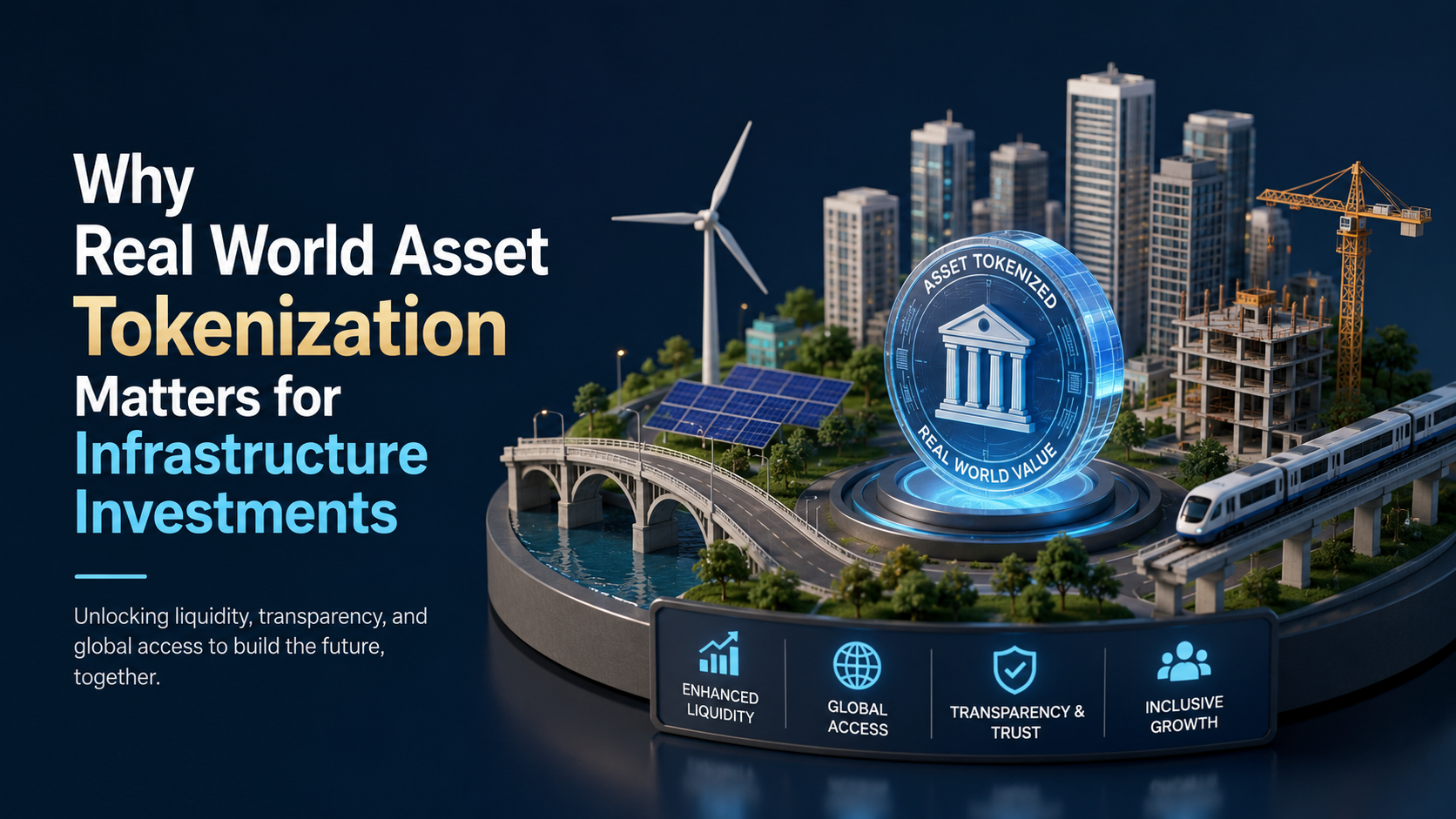
Infrastructure projects form the backbone of economic growth. Roads, bridges, airports, railways, power plants, telecommunications networks, water treatment facilities, and renewable energy projects support industries, businesses, and communities. Despite their importance, infrastructure investments have traditionally remained accessible only to governments, institutional investors, private equity firms, and large financial organizations due to high capital requirements and lengthy investment cycles.
As digital asset technologies continue gaining attention across financial markets, Real World Asset Tokenization has emerged as a practical approach for improving access to infrastructure financing. By converting ownership rights or economic interests in physical assets into digital tokens recorded on blockchain networks, infrastructure investments can reach a broader range of investors while introducing new methods for fundraising, ownership management, and asset distribution.
Today, organizations, investment firms, and project developers are evaluating how RWA Tokenization can support infrastructure financing models that have remained largely unchanged for decades. The growing interest in tokenized assets reflects a broader shift toward digital ownership structures that can support both investors and infrastructure operators.
This article examines why infrastructure investments are becoming an important application for tokenization and how organizations are using digital asset frameworks to support large-scale development projects.
Understanding Infrastructure Investments
Infrastructure investments involve funding assets that provide long-term public or commercial services. These projects generally require substantial capital expenditures and extended development timelines.
Examples include:
- Transportation networks
- Energy generation facilities
- Smart city developments
- Water management systems
- Telecommunications infrastructure
- Logistics hubs
- Renewable energy farms
- Public utility projects
Infrastructure assets often produce predictable revenue streams through user fees, leases, utility payments, or government contracts. This characteristic makes them attractive to long-term investors seeking stable returns.
However, infrastructure investing also presents several challenges:
- High entry barriers
- Limited liquidity
- Long lock-in periods
- Complex ownership structures
- Lengthy fundraising processes
- Restricted access for retail investors
These challenges have encouraged market participants to seek alternative investment structures capable of improving participation and operational efficiency.
The Rise of Real World Asset Tokenization
Real World Asset Tokenization refers to the process of converting ownership interests in physical assets into digital tokens stored on blockchain networks.
Instead of relying solely on traditional investment vehicles, ownership can be represented through digital tokens that correspond to specific economic rights associated with an asset.
For infrastructure projects, tokenization can represent:
- Equity ownership
- Revenue-sharing rights
- Debt instruments
- Project participation interests
- Asset-backed securities
Through RWA Tokenization, infrastructure projects may divide ownership into smaller units, allowing a wider investor base to participate.
This model introduces a digital framework for managing ownership while maintaining connections to tangible assets operating in the real economy.
Why Infrastructure Financing Needs New Approaches
The global demand for infrastructure investment continues to rise.
Population growth, urbanization, renewable energy adoption, and modernization initiatives require trillions of dollars in infrastructure spending over the coming decades.
Traditional financing methods often face limitations:
Capital Concentration
Large infrastructure projects typically depend on a small group of investors or lenders.
This concentration may reduce funding flexibility and increase financing risks when capital markets become unstable.
Long Investment Cycles
Infrastructure projects frequently require years before producing meaningful returns.
This reality discourages many investors who prefer shorter investment horizons.
Limited Investor Participation
Many infrastructure opportunities remain unavailable to smaller investors due to minimum investment requirements.
As a result, participation remains concentrated among institutions and wealthy individuals.
Liquidity Constraints
Selling infrastructure investment positions can be difficult because secondary markets are often limited.
Investors may remain locked into positions for extended periods.
These challenges have contributed to growing interest in Real World Asset Tokenization as an alternative framework for capital formation.
Fractional Ownership Expands Access
One of the most significant advantages of tokenization is fractional ownership.
Instead of requiring millions of dollars to participate in an infrastructure project, ownership can be divided into smaller digital units.
For example:
A $500 million renewable energy facility could be represented through millions of tokens, each reflecting a small ownership stake.
This approach allows:
- Individual investors to participate
- Smaller investment firms to enter projects
- International investors to gain exposure
- Family offices to diversify holdings
By lowering investment thresholds, RWA Tokenization broadens participation across multiple investor categories.
Improving Capital Formation for Infrastructure Projects
Infrastructure developers often spend considerable time securing project funding.
The fundraising process may involve:
- Bank financing
- Private placements
- Institutional investment rounds
- Government support programs
Tokenized investment models create an additional channel for raising capital.
Projects can reach a broader audience through regulated token offerings while maintaining compliance requirements.
This expanded access to capital can support:
- Renewable energy initiatives
- Transportation upgrades
- Urban development projects
- Public infrastructure programs
Organizations seeking funding frequently work with a RWA Tokenization Company to structure asset-backed digital offerings aligned with regulatory requirements.
Enhanced Liquidity Opportunities
Liquidity has historically been one of the largest challenges in infrastructure investing.
Traditional ownership interests often require lengthy transfer processes and limited secondary market participation.
Tokenized ownership structures may support more active trading environments where qualified investors can buy or sell tokenized interests.
Improved liquidity benefits both investors and asset owners by providing greater flexibility during investment holding periods.
Although liquidity levels depend on regulatory frameworks and market participation, tokenized assets introduce possibilities that are difficult to achieve through conventional infrastructure investment vehicles.
Global Investor Participation
Infrastructure development is no longer restricted to local funding sources.
Digital asset frameworks create opportunities for international participation.
An infrastructure project located in one region may attract investors from multiple countries, subject to regulatory compliance.
This broader investor reach may help:
- Increase funding opportunities
- Diversify investor pools
- Reduce reliance on local capital markets
- Improve project visibility
As digital investment ecosystems mature, global participation continues attracting attention from developers and investment firms.
Greater Asset Visibility
Infrastructure investments often involve extensive documentation and reporting requirements.
Tokenized asset frameworks can maintain digital records related to:
- Ownership structures
- Investment allocations
- Revenue distributions
- Asset performance data
- Transaction histories
This recordkeeping framework contributes to improved asset visibility for investors and project stakeholders.
Many organizations offering Real World Asset Tokenization Services focus on creating systems that provide consistent reporting and ownership management capabilities.
Renewable Energy as a Major Opportunity
Renewable energy infrastructure has become one of the most active sectors for tokenized assets.
Projects include:
- Solar farms
- Wind energy facilities
- Battery storage systems
- Green hydrogen projects
- Microgrid developments
Renewable energy projects often produce predictable revenue streams, making them suitable candidates for tokenized investment structures.
Developers seeking alternative funding mechanisms increasingly examine RWA tokenization platform development initiatives to attract investors interested in sustainability-focused assets.
The combination of renewable infrastructure and digital ownership models continues receiving attention from financial institutions and technology providers.
The Role of Smart Contracts in Infrastructure Assets
Smart contracts automate predefined actions associated with digital assets.
Within tokenized infrastructure investments, smart contracts may support:
- Revenue distribution
- Investor payments
- Ownership transfers
- Compliance procedures
- Governance mechanisms
These automated processes reduce manual administration while supporting efficient asset management activities.
Organizations involved in RWA Tokenizaion development frequently integrate smart contract frameworks to manage investor interactions and asset operations.
Secondary Markets and Infrastructure Assets
Traditional infrastructure investments often lack active secondary markets.
Tokenized assets introduce the possibility of regulated marketplaces where investors can exchange ownership interests more efficiently.
Benefits may include:
- Increased investor flexibility
- Broader participation
- Better capital allocation
- Reduced transfer complexity
The development of digital asset exchanges and regulated trading venues continues supporting interest in infrastructure tokenization.
As market infrastructure improves, tokenized assets may become more accessible to institutional and retail participants alike.
Institutional Interest Continues Growing
Financial institutions are increasingly evaluating tokenized asset models.
Investment managers, banks, private equity firms, and infrastructure funds are examining opportunities related to digital asset ownership structures.
Several factors contribute to this interest:
- Asset diversification
- Digital ownership frameworks
- Capital market modernization
- Alternative fundraising models
- Improved investment accessibility
Many institutions are collaborating with a RWA tokenization development company to evaluate pilot programs and infrastructure-focused tokenization initiatives.
This institutional participation contributes to growing confidence in tokenized asset ecosystems.
Regulatory Considerations
Infrastructure tokenization must operate within applicable legal and regulatory frameworks.
Key considerations include:
Securities Compliance
Tokenized assets may qualify as securities depending on their structure and jurisdiction.
Investor Protection
Projects must establish mechanisms for investor disclosures and risk management.
Ownership Verification
Identity verification procedures remain important for compliance and market integrity.
Cross-Border Regulations
International participation requires attention to multiple regulatory environments.
Organizations offering RWA Tokenization Services typically work closely with legal advisors and compliance specialists throughout implementation.
Technology Infrastructure Supporting Tokenization
Successful infrastructure tokenization initiatives depend on reliable technology frameworks.
Components often include:
- Blockchain networks
- Smart contracts
- Investor portals
- Custody solutions
- Compliance systems
- Asset management platforms
Specialized providers involved in RWA tokenization development services assist organizations in designing systems capable of supporting long-term infrastructure investment requirements.
Technology selection remains an important consideration when developing tokenized asset ecosystems.
Economic Benefits for Infrastructure Development
Infrastructure funding shortages remain a challenge in many regions.
Tokenized investment models can contribute to economic development by supporting:
- Faster project funding
- Broader investor participation
- Capital market innovation
- Infrastructure modernization
- Renewable energy expansion
Governments and private-sector organizations increasingly recognize the potential role of tokenization in supporting future infrastructure initiatives.
As funding requirements continue increasing, alternative investment models are likely to gain greater attention.
How Businesses Are Approaching Tokenized Infrastructure Projects
Organizations entering this sector generally follow several stages:
Asset Evaluation
Determining whether an infrastructure asset is suitable for tokenization.
Legal Structuring
Establishing ownership and compliance frameworks.
Token Design
Defining economic rights associated with tokenized interests.
Technology Deployment
Implementing blockchain and smart contract systems.
Investor Onboarding
Creating processes for investor participation and compliance verification.
Ongoing Asset Management
Maintaining reporting, governance, and distribution mechanisms.
Many organizations rely on RWA Tokenization Company specialists to guide implementation and operational planning.
The Growing Importance of RWA Token Development
Token creation represents a fundamental component of asset tokenization initiatives.
RWA token development involves designing digital tokens that accurately represent ownership interests and economic rights associated with infrastructure projects.
Development considerations include:
- Token standards
- Governance rights
- Revenue distribution models
- Compliance integration
- Security mechanisms
As infrastructure tokenization activity expands, token design strategies continue becoming more sophisticated across different asset classes.
Future Outlook for Infrastructure Tokenization
Infrastructure financing requirements are expected to increase significantly over the coming years.
Governments face growing demands for:
- Renewable energy capacity
- Transportation modernization
- Urban infrastructure upgrades
- Digital connectivity projects
- Water resource management
Traditional financing methods alone may not satisfy future capital requirements.
Real World Asset Tokenization introduces a framework capable of connecting infrastructure projects with broader investor communities while supporting digital ownership structures.
The continued development of regulatory standards, institutional participation, and digital asset markets may contribute to wider adoption of tokenized infrastructure investments.
Conclusion
Infrastructure assets play a vital role in economic development, yet traditional investment structures often limit participation, liquidity, and capital access. Real World Asset Tokenization introduces a digital approach that allows infrastructure projects to attract funding from a broader range of investors while supporting more flexible ownership structures.
Fractional ownership, global investor participation, digital recordkeeping, and secondary market opportunities have positioned RWA Tokenization as a topic of growing interest among project developers, investment firms, and financial institutions. As governments and private organizations seek new methods to fund large-scale infrastructure initiatives, tokenized assets are becoming an increasingly relevant consideration.
Organizations working with a RWA Tokenization Company, adopting Real World Asset Tokenization Services, investing in RWA Tokenizaion development, utilizing RWA tokenization development services, pursuing rwa tokenization platform development initiatives, and focusing on RWA token development are contributing to a new chapter in infrastructure finance. While regulatory and operational considerations remain important, the growing intersection between infrastructure investment and digital asset technology suggests that tokenization will continue gaining attention across global capital markets.

 English
 Arabic
 French
 Portuguese
 Deutsch
 Turkish
 Dutch
Dutch
 Italiano
 Russian
 Romaian
 Portuguese (Brazil)
 Greek
Greek